


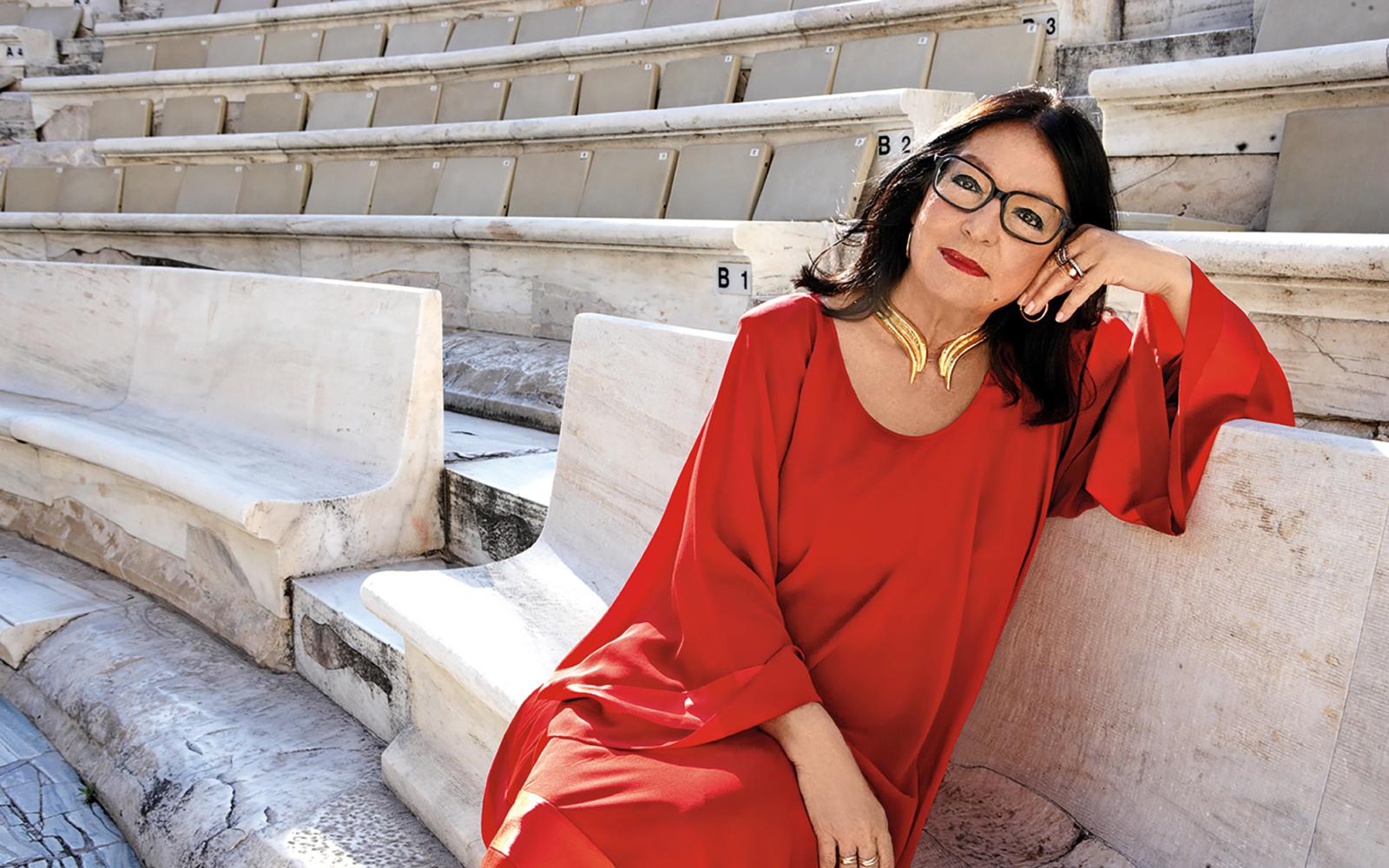
Nana Mouskouri : The Voice
She has sold more than 300 million records. She has given more than 10,000 concerts and performed over 1,500 songs. She is established as one of the most successful singers in history, alongside legends like the Beatles and Elvis Presley. She has moved, uplifted, and enchanted audiences in every corner of the Earth. And yet, Nana Mouskouri never spoke of numbers. Nor did she speak of records or accolades. She never needed to. Because her journey isn’t measured – it’s heard. And, perhaps for her, it can be summed up entirely in the lyrics of her favourite song: My Love Is Somewhere.
Ms Mouskouri, what is your earliest memory of music? Was there a particular song or sound that captivated you as a child and made you dream of a life in music?
My earliest memory of music is songs from movies. My father, a cinema technician, worked at the Proteas cinema in Koukaki – unfortunately, it no longer exists. Inside, there was a small house where we lived. The song that marked me the most was Over the Rainbow from The Wizard of Oz, sung by Judy Garland. It gave me hope – something we desperately needed at the time because of the war. Those songs were my very first wings.
You grew up in great poverty. Your family often had to move because you couldn’t afford the rent. In the end, do we learn more from life’s hardships?
Our life was very poor and extremely difficult. Of course, as children –my sister and I– we didn’t fully realise it because there was love in our family. But as I grew older, I came to understand the hardships and realised that life is a struggle, and nothing is given to you for free.
Has music always been your top priority? Did you have to make any sacrifices along the way?
Music has always been, and will always be, my top priority. It wasn’t just a job to me; it was my life’s calling and my deepest passion. It’s what brought me to where I am today.
Was there ever a time when music felt like your own medicine?
Absolutely. As I’ve said, I was a child of war – and my songs helped heal the wounds I carried inside me.
You’ve said that you never had much self-confidence. How does an artist without confidence manage to reach the top of global record sales alongside Elton John, Madonna, and the Beatles?
I may not have had much self-confidence as a person. But I knew what I wanted to do, and when I stepped onto the stage, I felt a sense of certainty. I was always willing to learn, and I always wanted to improve, to become better. I worked hard – and I still work very hard. The journey never truly ends.
You’ve sung in every corner of the world and encountered so many different cultures. What element from each place do you feel shaped you a little more? In the end, where would you say your true homeland lies?
I’ve drawn elements from many countries and cultures and made them part of who I am – but Greece is my one and only homeland.
You are a global Greek. Do you feel as though you carry Greece with you on every journey, at every concert?
I always feel a tremendous responsibility. I have to respect both my own country, which in a way I represent –and I must do so properly– and the country I’m visiting. I’ve travelled to almost every corner of the globe. In every country, they accepted my identity, and I respected their cultures. As for the songs, there is no concert where I don’t sing both in the language of the country we’re performing in and in Greek. After all, I always end my concerts with Ηartino To Feggaraki (Paper Moon).
What is it that kept you humble and grounded in a world that constantly seeks adoration?
Love and respect for what I did – that’s what kept me grounded. I was never interested in adoration. All I ever longed for was the love of the people.
Behind the stage, beyond the lights and applause – who is Nana Mouskouri?
I’m the same person whether I’m on stage, in the studio, or at home with my loved ones. And I believe I haven’t changed – which is why, after all these years, I never took off my glasses, even though at first, everyone insisted I should.
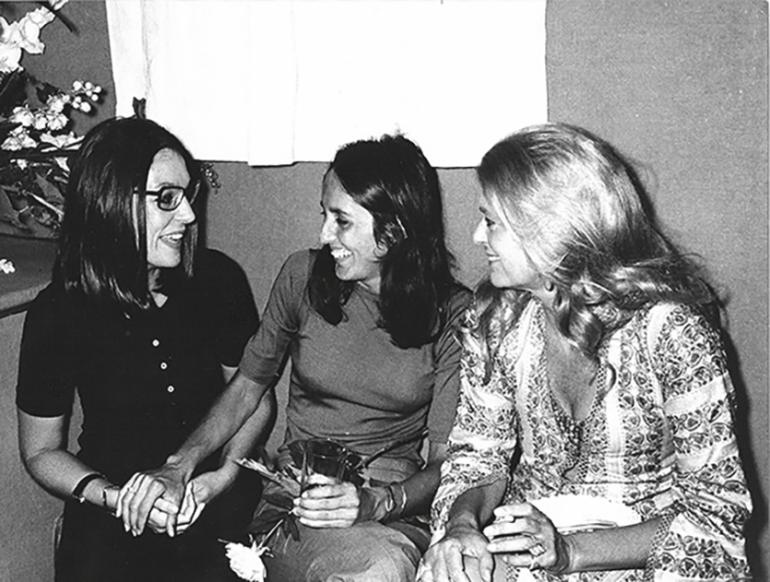
Throughout your career, the world’s circumstances, social trends, and art have all changed. What is it that has remained unchanged in you and deeply yours?
I believe I’ve grown alongside my age – and I’ve grown beautifully. That’s why, I must admit, I feel a sense of pride. However, what hasn’t changed is my need to learn. And as my beloved Nikos Gatsos used to say: make the sun your boundary and always search for the truth.
Your voice is your mark on the world. Do you see it as something entrusted to you, a way to carry a deeper message to others?
Love and respect for one another. To me, that is the most powerful and timeless message of all. With everything happening around us, I pray for peace. I know it may sometimes sound a bit cliché, but when you have lived through war, when you’ve heard the sirens, when you’ve run to shelters, and when you’ve seen the streets filled with the dead from hunger and the wounded from the frontlines, you feel the need to send a message of peace.
If you were asked to send a message to a young artist just starting out, what advice would you give them?
First, they should study and work on their art – to understand the how and why of things, and most importantly, not make success the goal of their life. The surest way to fail is to chase success. On the other hand, if success comes, they must understand that it comes with great responsibility. When I won my first award at the inaugural Greek Song Festival in 1959 with My Love Is Somewhere, Konstantinos Karamanlis told me, “From now on, you should fear no one. Not that there won’t always be someone ahead of you – that’s life. What matters is that you surpass yourself and let the world decide.”
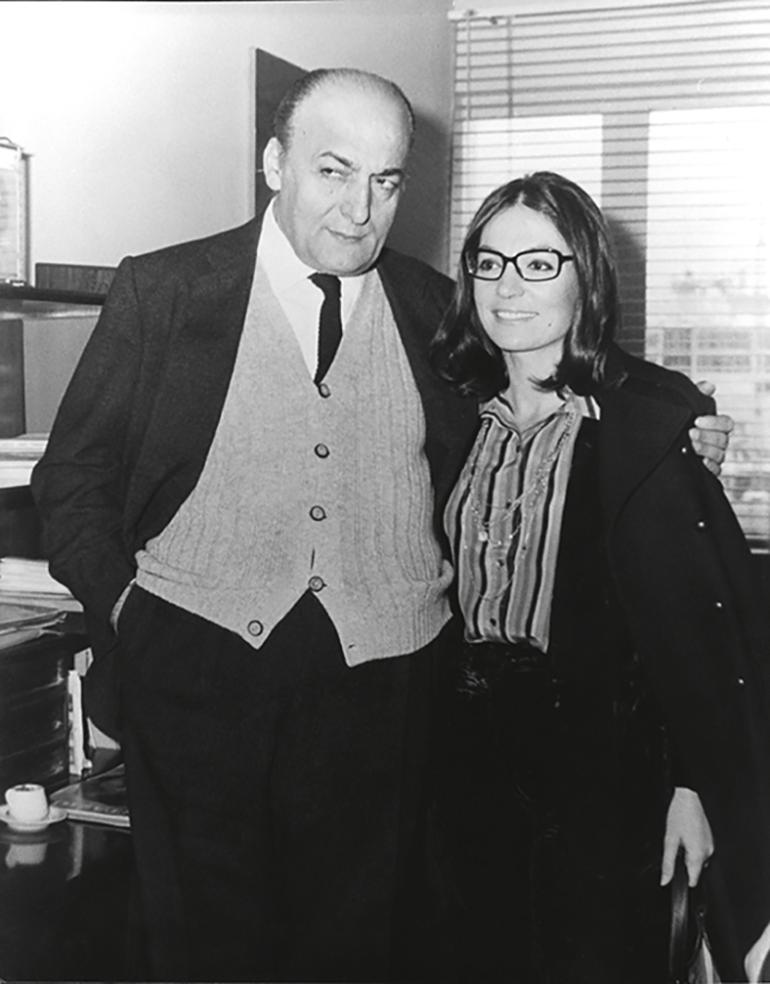
Memories are like musical notes; sometimes they fade gently, and sometimes they last forever. If you had to choose just one memory from all these years, which one would you want to freeze in time?
All the experiences that became memories have led me to who I am today. I can’t choose just one memory, just as I can’t remove a note from a song. I’m deeply grateful to life for everything it has brought me – for all the travels I’ve had, for all the songs I’ve sung, and for all the moments I’ve lived, both the easy and the difficult ones. I thank God and life for everything.
If your life were a song, what would its title be, and what message would you want to convey through it?
My Love Is Somewhere, the song with which, 66 years ago, we won our first award with Manos Hadjidakis. I hope everyone finds it and never loses it.
_____________________________________
INTERVIEW : ROMINA XYDA
YOU MAY ALSO LIKE
A PLACE – AN ETERNITY
The Multi-Talented Nikos Aliagas
LOUIS VUITTON