


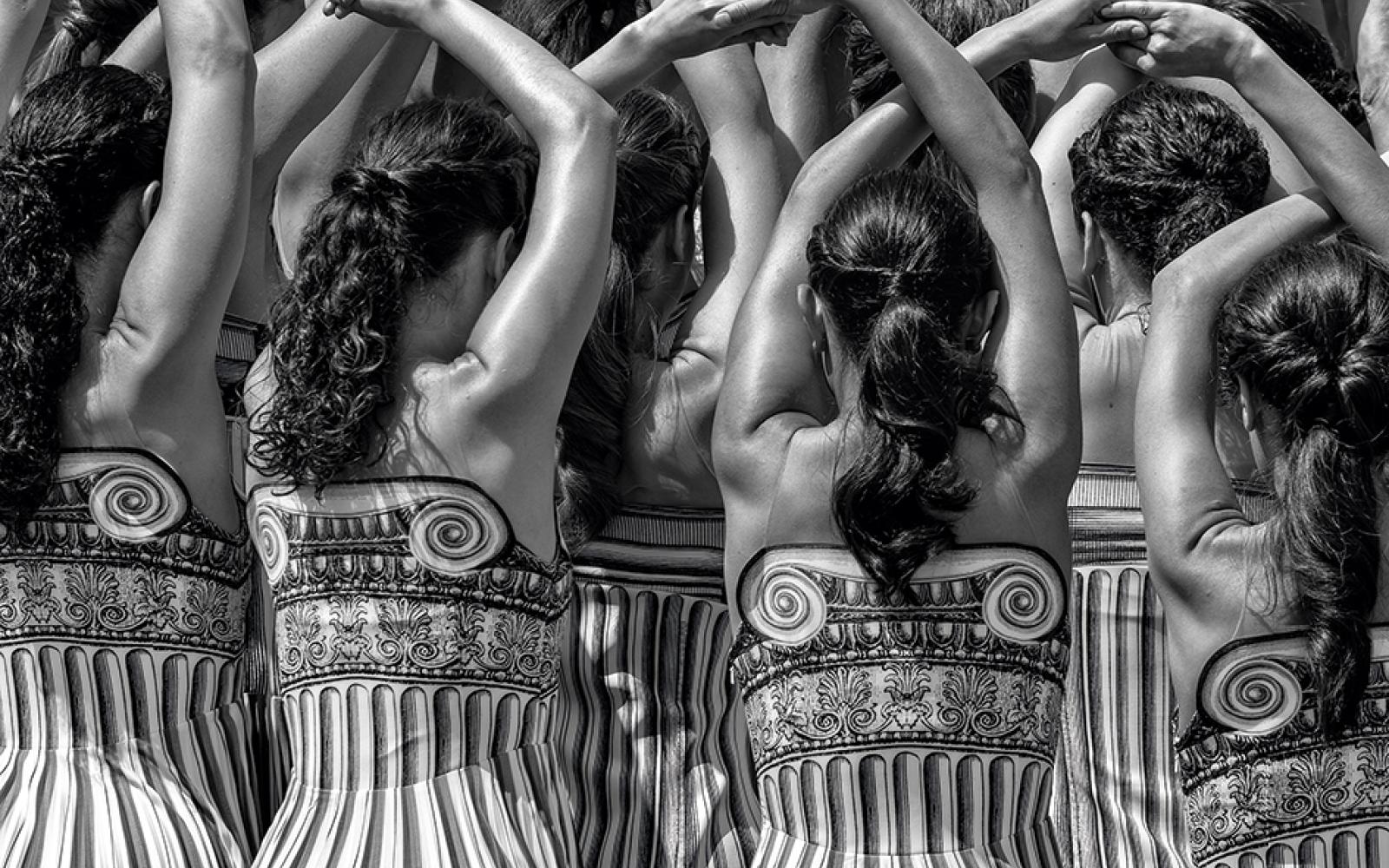
The Multi-Talented Nikos Aliagas
The internationally acclaimed journalist and tv presenter found in photography a new way to tell stories that transcend words.
Born in France to Greek parents, Nikos Aliagas went on to become one of the most influential figures on French television, always carrying within him two worlds: the glamour of Paris and the light of Greece. It is this dual identity that continues to shape the way he sees people, time, and travel.
For him, journeys are not measured in miles but in experiences. From brightly lit television studios to the lagoon of Messolonghi, his path has been shaped by a constant search between departure and return. Today, through photography, he turns his gaze towards people and places marked by the passage of time, seeking out those rare moments of authenticity that remain alive no matter how many years go by.
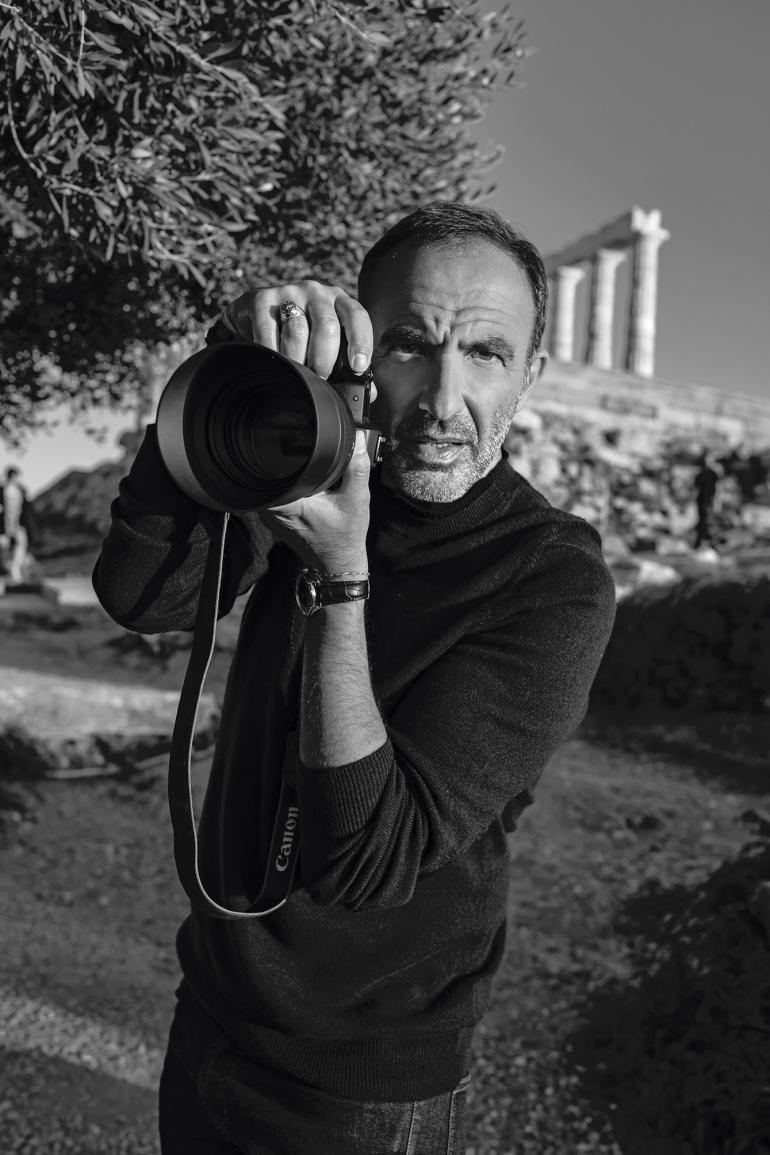
Living and creating in France for so many years, how have you managed to keep your Greek identity alive – not only as part of who you are, but also as a way of thinking and expressing yourself through your work?
For me, Greekness was never about folklore or a distant heritage. It is a way of looking at the world, of relating to people and to time itself – a kind of guiding memory. I grew up between two cultures and two languages. In France, where I was born, I learned a Western discipline of thought; from Greece, I held onto our language as a form of identity, and I learned the value of measure – the right sense of distance and balance. I believe that what is truly essential in life is not always tangible. Self-awareness often passes through the intangible, through things that cannot easily be explained. I carry within me an inner world deeply connected to Greece. It reveals itself as a sense of return, a strange nostalgia that continually brings me closer to people.
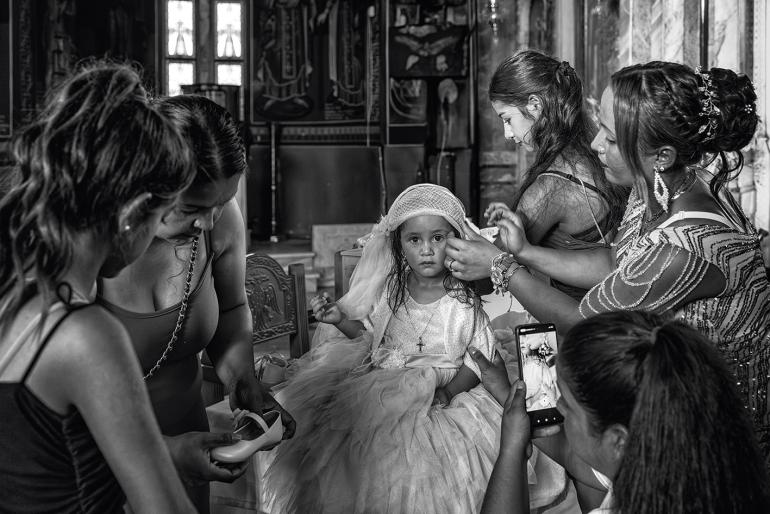
That inner world found remarkable expression under the spotlight and brought you tremendous success. Are there moments when you feel the need to step away from it all? Has your involvement in photography become a way of returning to yourself?
Absolutely. Television is a world of intensity, speed, and noise – a world I have been part of for thirty-five years. I know the rules of the arena well. Photography came into my life as an existential need. When I photograph, observation becomes a form of expression. It is perhaps the only space where I can truly lose myself and, paradoxically, feel closer to who I really am. It is not that I pretend when I stand in front of the camera; I am simply doing my job. But behind the lens, I feel able to express myself without the pressure of exposure. I have nothing to prove there. Photography brings me back to a more introspective dimension.
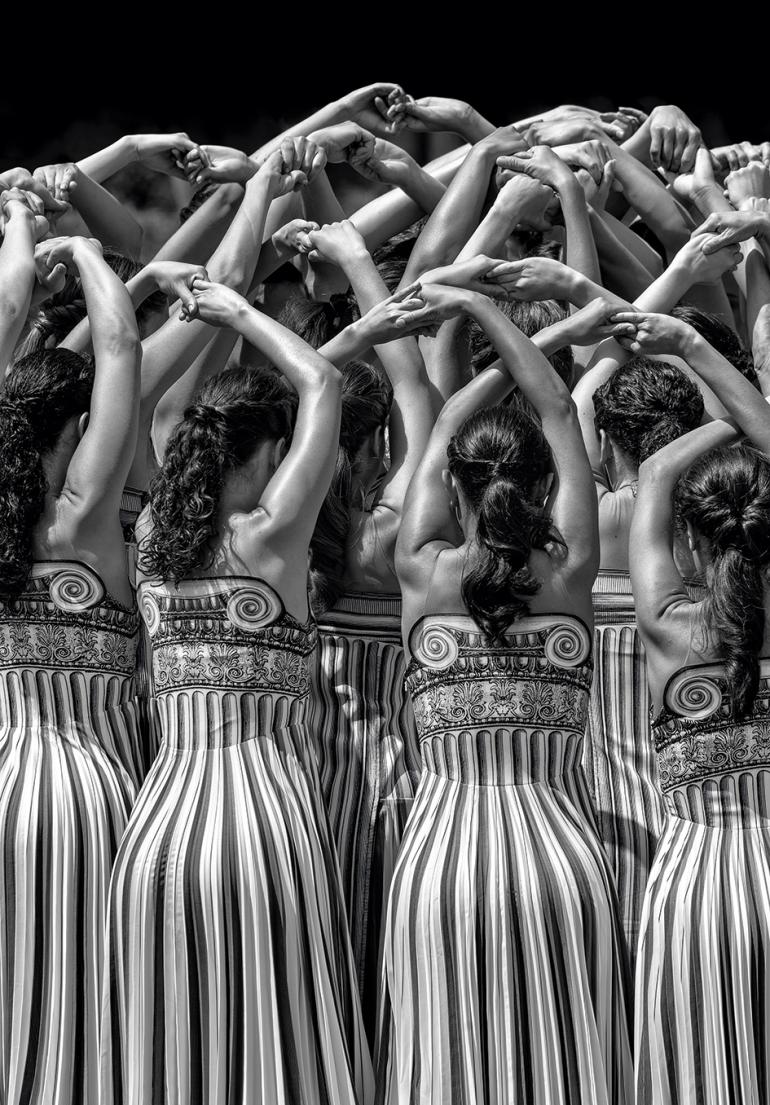
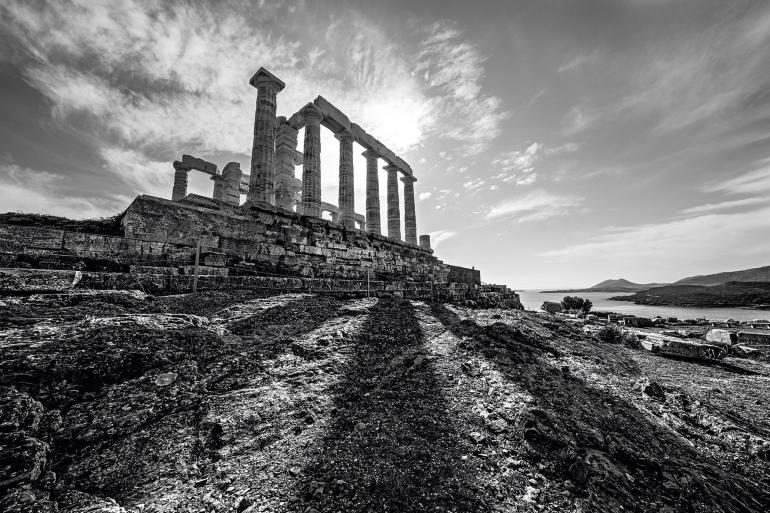
When did you first feel the need to express yourself through images, and how did that initial spark evolve into such a meaningful and lasting relationship with the medium?
It all began when my father gave me a small Kodak Instamatic camera. I was still a child. He could see that I was restless by nature and that I noticed things no one else paid attention to. I still remember the shock I felt when I realised that such a small box could preserve something from being lost forever. Over the years, I came to understand that what interested me was not simply taking or collecting images, but capturing the traces of life – the bittersweet passage of time. Without fully realising it at first, photography became a way of resisting oblivion.
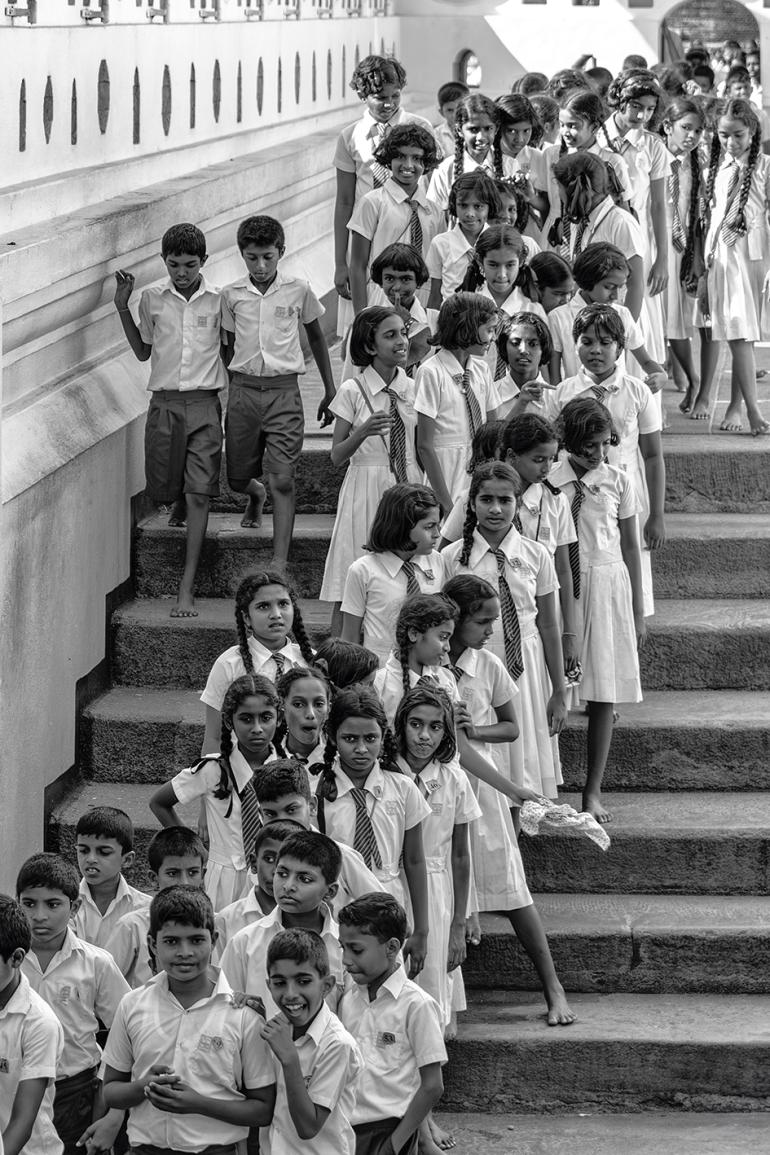
You have said that you photograph in order to breathe. What is it that gives you this sense of oxygen?
In the feeling that I truly exist within the moment. Photography forces me to look more deeply, to listen to the world without interrupting it. In an age of relentless speed, where each image instantly replaces the one before it, photographing allows me to touch the mystery of life and hold my breath, as though I were immersed in a deep inner dive.
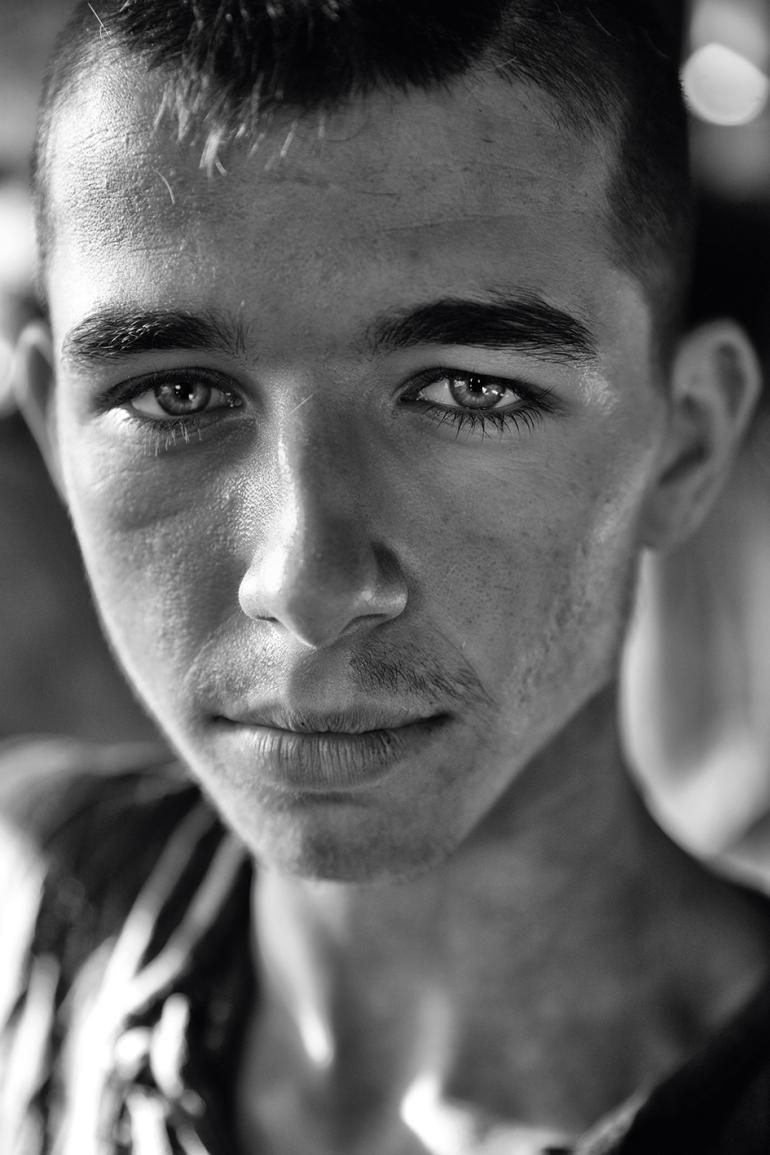
Your work has a deeply human-centred perspective. What is it that fascinates you most when you turn your lens towards another person?
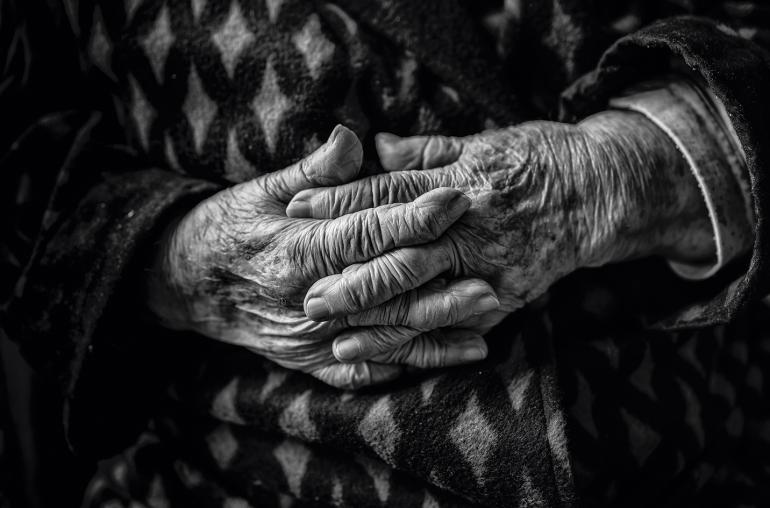
I am always drawn to what lies behind the face or the social mask – the silences, the dignity, the marks left by time. Every person carries an invisible biography within them. I do not need to know much; it is enough for me to be able to feel. Intuition is the beginning of a dialogue. I recognise an inner world that speaks to me. The most powerful images are born when the protective mask falls away. That is where a person’s deepest existential truth reveals itself – within the fracture, within the vulnerability. And empathy is transformed into a mirror.
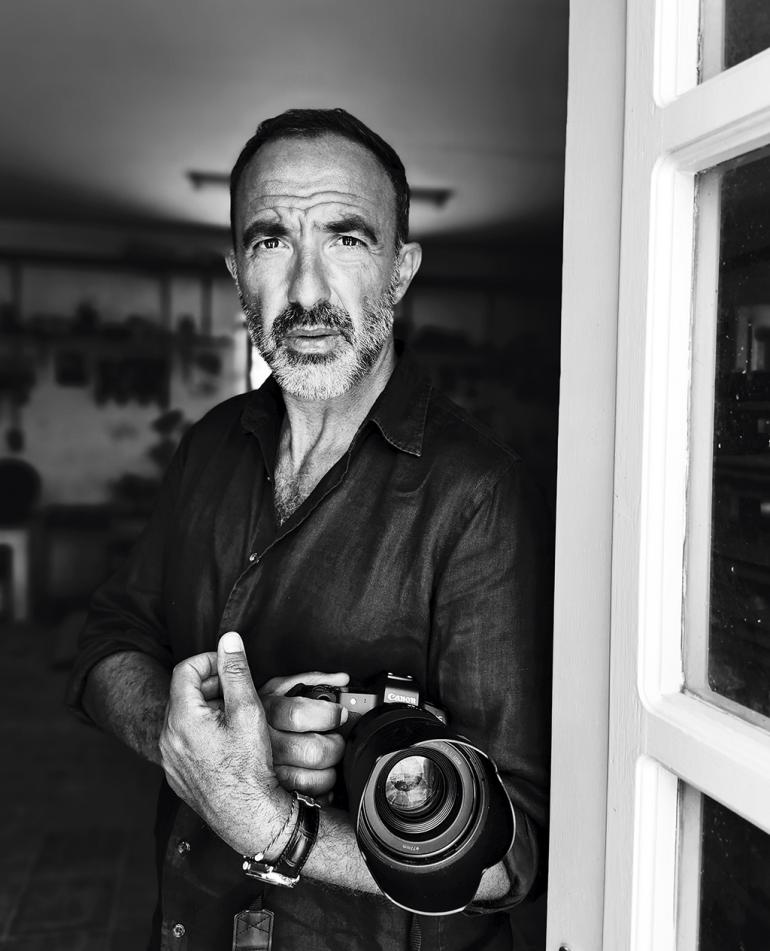
Why does black and white move you so deeply?
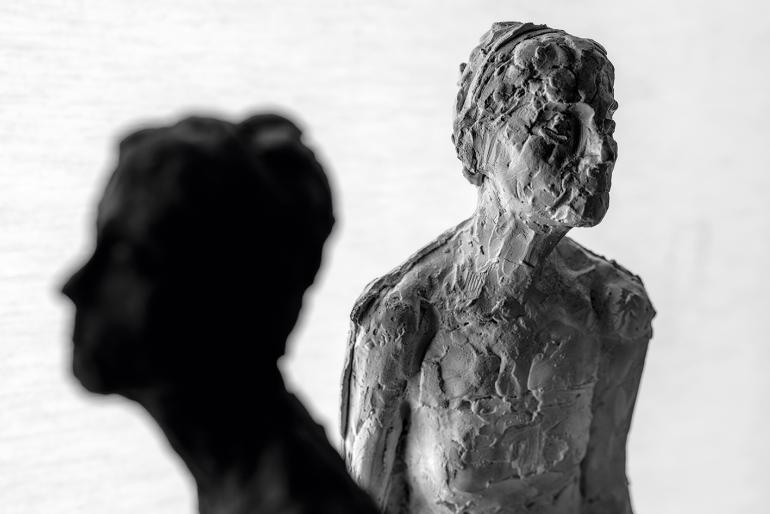
Perhaps because it strips away the noise of the world. Black and white touches something utterly timeless. In it, light and shadow are free to converse with one another. When colour is removed, only what is essential remains: a gaze, a silence, a gesture. Colours fade more easily, whereas black and white seems to resist time itself. A black-and-white photograph by Brassaï, André Kertész or Robert Frank from the beginning of the last century can feel more alive than many colour images taken today. It does not simply capture an era. It preserves not just an impression, but something more primal: the archetype.
You have photographed some of the most recognisable faces in the world, as well as ordinary people. In the end, who leaves the deeper impression on you?
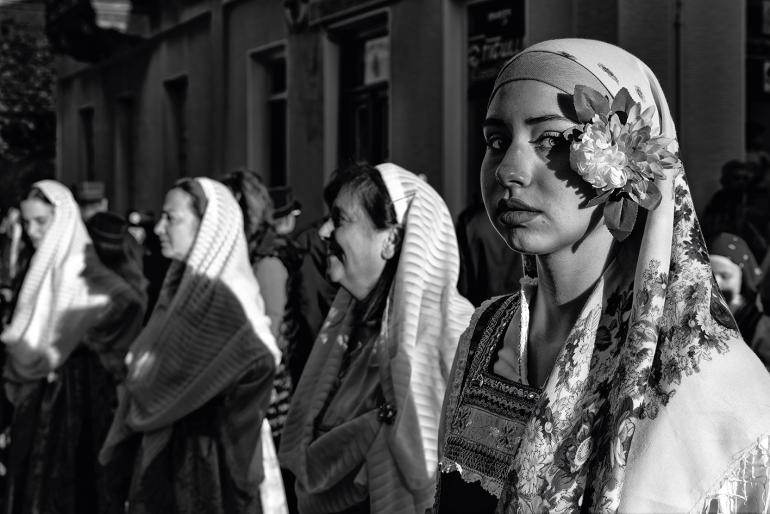
The people who do not try to impress. Those who carry within them something older and deeper than themselves. Sometimes, the gaze of a fisherman in Messolonghi or an elderly woman in Thrace can move me more profoundly than any famous face. Fame does not guarantee depth, and conversely, obscurity does not necessarily guarantee authenticity either.
How much does your Greek identity –and your memories of your homeland– influence the way you see and capture the world?
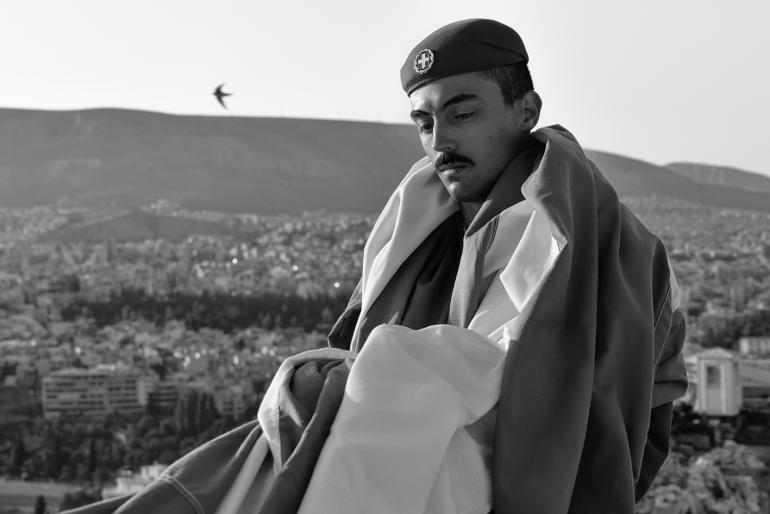
I feel deeply attuned to Greece. I am intensely influenced by this coexistence of beauty and tragedy that runs through our Greek heritage. Perhaps that is why I am so moved by ordinary people, weathered landscapes, the elderly, ancient olive trees, and faces that seem to have been sculpted by time itself. I feel that I come from this very same substance – both visible and invisible. I recognise something familiar in it: the quiet resilience of people who continue to stand tall, even when life puts them to the test.
If you could turn back time, which moment would you rush to record?
Perhaps a deeply personal moment. My father, working quietly in his tailor’s shop. My mother, teaching me Greek at home when I was a child. As you grow older, you come to realise that the greatest stories are often hidden within the simplest moments of childhood.
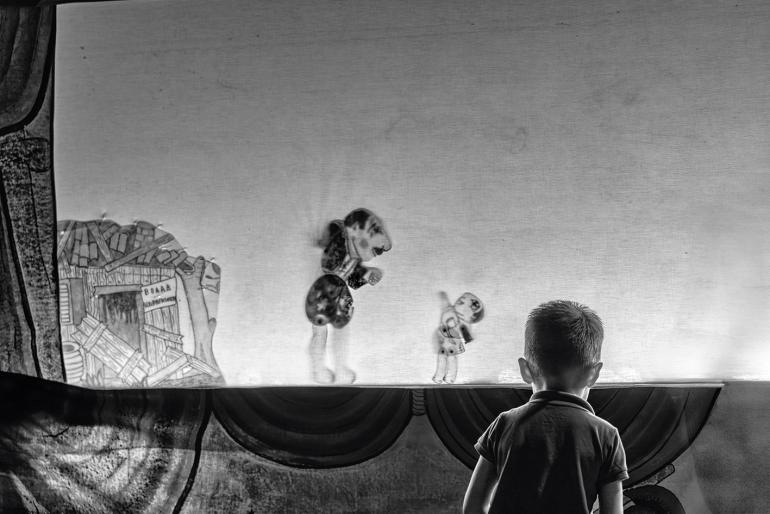
And if you could leave behind just one image that would define you, what would it be?
Perhaps two ancient olive trees in Stamna, near Messolonghi, their branches seeming to touch in the wind as though they were dancing. For me, that image expresses something deep: roots, endurance through the passage of time, and the human need to remain connected to something greater than oneself. Those olive trees have been dancing for centuries, and they will continue to dance long after we are gone. I am deeply moved by their quiet compassion towards us. And the fact that this image is becoming a postage stamp in France touches me profoundly. It feels as though a dialogue between my two homelands is still continuing.
_______________________________________
INTERVIEW : ROMINA XYDA
PHOTOS : NIKOS ALIAGAS
YOU MAY ALSO LIKE
LOUIS VUITTON
ELEVATED GASTRONOMY
CYCLADIC